Solar panels are often associated with hot, sunny days, leading many to assume that the sun’s heat is the primary driver of electricity production. In reality, solar photovoltaic (PV) technology relies far more on the energy carried by photons the particles of light than on thermal heat. Understanding this distinction is key to appreciating how solar systems perform in the real world and why managing temperature matters for long-term efficiency.
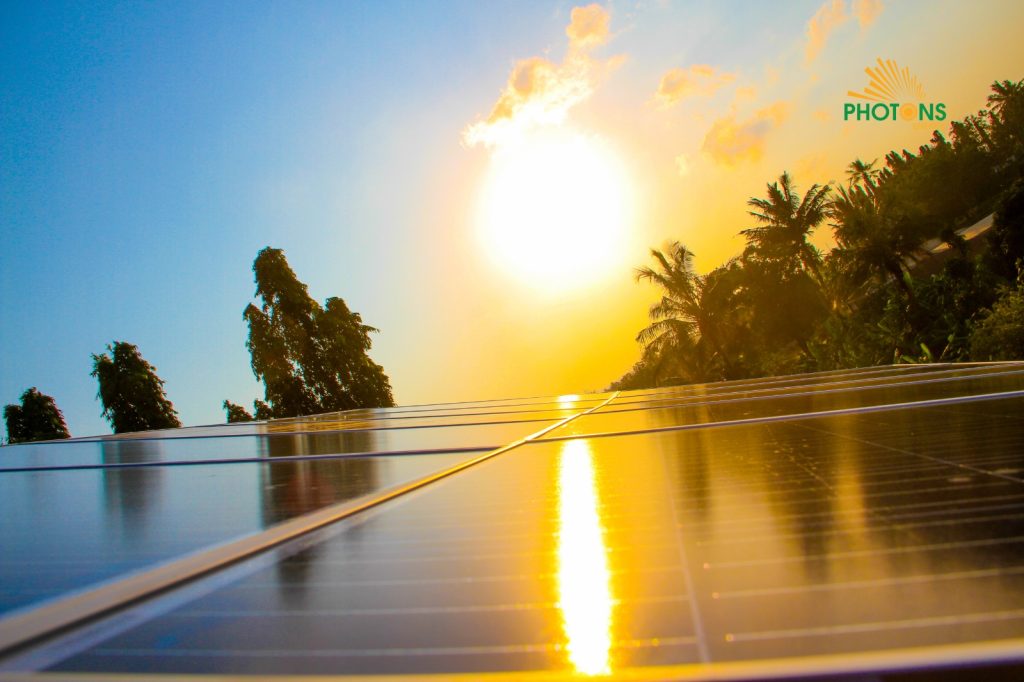
At the heart of every solar panel is the photovoltaic effect. Sunlight consists of photons with varying energy levels corresponding to different wavelengths. When these photons strike the semiconductor material (typically silicon) in a solar cell, they can be absorbed, providing enough energy to dislodge electrons from their atomic bonds. This creates electron hole pairs that, when channeled properly through the cell’s structure, generate direct current electricity.
It is this photonic interaction not the sun’s infrared heat that produces power. Panels convert a portion of the visible and near infrared light spectrum most effectively. Excess heat from the sun (or ambient air) is largely a byproduct that the system must tolerate rather than utilize.
Why Excessive Heat Reduces Efficiency
While light is beneficial, heat is detrimental to performance. Solar panels are rated under Standard Test Conditions (STC) at 25°C (77°F). In real world operation, especially on rooftops in direct sunlight, cell temperatures can easily climb to 45–65°C or higher.
This temperature rise affects the semiconductor’s properties in several ways:
- Increased carrier recombination: Higher temperatures give electrons more thermal energy, increasing the likelihood that excited electrons will recombine with holes before contributing to electrical current. This reduces the usable voltage output.
- Voltage drop dominates: Although current may increase slightly with temperature, the voltage decreases more significantly (linearly), leading to an overall reduction in power (Power = Voltage × Current).
- Temperature coefficient: Most commercial silicon panels have a temperature coefficient of power (Pmax) between -0.3% and -0.5% per °C above 25°C. For example, with a -0.4%/°C coefficient and a cell temperature 30°C above STC, you could see roughly a 12% drop in power output under peak sun.
In hot climates, this can translate to 10–25% lower annual production than the rated capacity suggests. Panels don’t “like” extreme heat; they perform best in bright, cool conditions.
Additional Factors and Real World Implications
Heat also accelerates long term degradation and can stress other system components like inverters. Proper installation (adequate airflow beneath panels, reflective roofing, or elevated racking) helps mitigate these effects by keeping cells cooler.
What this means for your solar system
High temperatures are a normal part of solar operation, but they reduce instantaneous output and can influence lifetime performance. On the hottest days when sunlight is strongest your system may not deliver its full rated capacity. Accounting for temperature losses during design ensures realistic energy production estimates, better ROI calculations, and optimized system sizing. Good ventilation and site-specific planning help maintain higher average efficiency year-round.
How to choose better panels
Look beyond peak efficiency ratings and scrutinize the temperature coefficient of Pmax. Panels with lower (less negative) coefficients, such as -0.3%/°C or better, maintain more output in heat. Consider advanced technologies like PERC, half-cut cells, or heterojunction (HJT) designs, which often perform better thermally. High quality panels from reputable manufacturers also include robust warranties that cover performance under real-world conditions. Always review datasheets for NOCT (Nominal Operating Cell Temperature) ratings, which provide a more realistic view of field performance.
Why our solutions are optimized for this
Our solar solutions are engineered with premium panels featuring superior temperature coefficients, advanced thermal management in mounting systems, and intelligent system design that prioritizes airflow and heat dissipation. We select components proven to deliver reliable output even in challenging climates, maximizing photon to electricity conversion while minimizing heat-related losses. This approach translates to higher lifetime energy yield, lower levelized cost of energy, and greater peace of mind for our customers because true solar performance is about harnessing light efficiently, not just surviving the heat.
Ready to optimize your solar investment? Contact us today for a consultation tailored to your location and needs.